


Every business fears the moment when a server crash or disaster strikes and takes their critical data center offline. Most people worry about backups, but the reality is far more intense. Enterprise-level organizations can lose thousands of dollars per minute when their systems go down and often rely on hot sites to keep running with barely a hiccup. This kind of backup goes way beyond saving files. It is about instantly snapping back to life, no matter what hits.
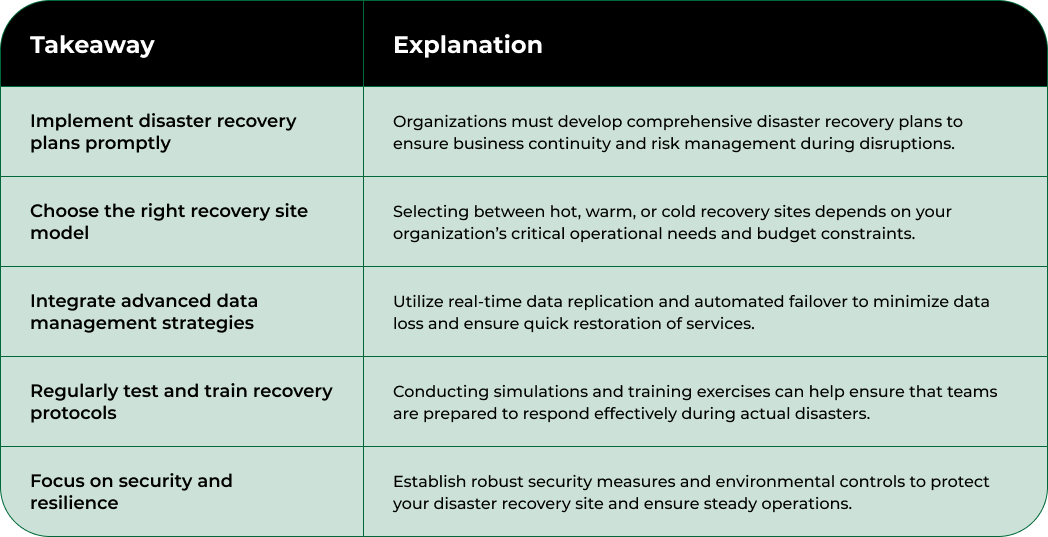
A data center disaster recovery site represents a strategic backup infrastructure designed to ensure business continuity during unexpected system failures, natural disasters, or significant technological disruptions. Unlike standard backup systems, these specialized facilities provide comprehensive protection for an organization’s critical computing resources and data infrastructure.
A data center disaster recovery site functions as a redundant computing environment capable of rapidly taking over operational responsibilities when the primary data center becomes compromised. These sites are engineered to maintain minimal downtime, preserving an organization’s ability to continue essential services and protect mission-critical data.
Key characteristics of an effective data center disaster recovery site include:
Organizations can implement different recovery site models based on their specific operational requirements and budget constraints. According to NIST’s Contingency Planning Guide, these models typically include:
The selection of a disaster recovery site model depends on factors such as industry regulations, financial resources, recovery time objectives, and the criticality of the organization’s digital infrastructure.
The following table compares the three main types of data center disaster recovery sites to help clarify their core differences and appropriate use cases.

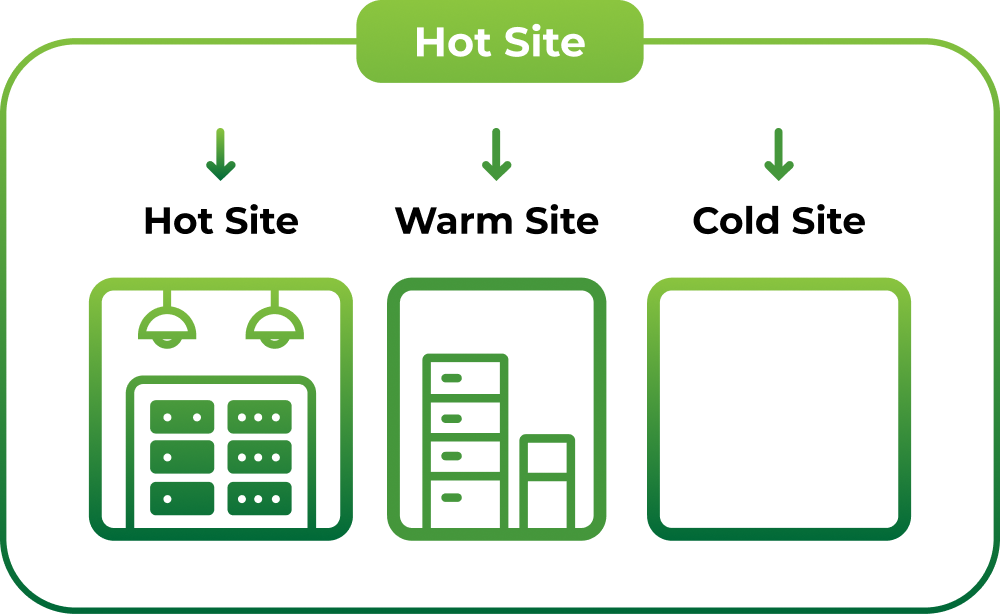
Enterprise-level organizations often prioritize hot sites to ensure minimal operational interruption, while smaller entities might opt for more cost-effective warm or cold site strategies.
By maintaining a robust data center disaster recovery site, organizations can effectively mitigate risks associated with potential system failures, cybersecurity incidents, or catastrophic events, ultimately protecting their operational continuity and maintaining stakeholder confidence.
Disaster recovery for data centers transcends simple technological preparation, representing a critical strategic imperative for organizations seeking to maintain operational resilience in an increasingly complex digital landscape. The fundamental goal of disaster recovery goes beyond technical infrastructure protection, encompassing comprehensive business continuity and risk management strategies.
The potential consequences of inadequate disaster recovery planning can be catastrophic. Unplanned data center outages can result in substantial financial losses, with some estimates suggesting that enterprises can lose thousands of dollars per minute during system downtime. These economic implications extend far beyond immediate revenue disruption, potentially damaging an organization’s reputation, customer trust, and long-term market positioning.
Key economic risks associated with poor disaster recovery include:
According to NIST’s Special Publication on Cyber Resilience, disaster recovery represents a proactive approach to technological risk management. Effective disaster recovery strategies allow organizations to:
Modern disaster recovery approaches integrate multiple technological and procedural safeguards. Comprehensive disaster recovery extends beyond physical infrastructure, incorporating advanced strategies such as cloud-based backup systems, real-time data replication, and automated failover mechanisms. These approaches ensure that organizations can quickly transition operations to alternative systems with minimal disruption, maintaining critical service levels during unexpected events.
By investing in robust disaster recovery capabilities, organizations transform potential vulnerabilities into strategic strengths, creating a technological infrastructure capable of withstanding and rapidly recovering from unexpected disruptions.
A comprehensive disaster recovery site requires meticulous planning and integration of multiple sophisticated technological and organizational components. These elements work together to create a robust, resilient infrastructure capable of maintaining operational continuity during unexpected disruptions. Understanding the critical components is essential for developing an effective disaster recovery strategy.
The foundational elements of a disaster recovery site encompass more than just hardware and network systems. Physical infrastructure represents the backbone of disaster recovery capabilities, requiring strategic design and implementation to ensure rapid, seamless operational transitions.
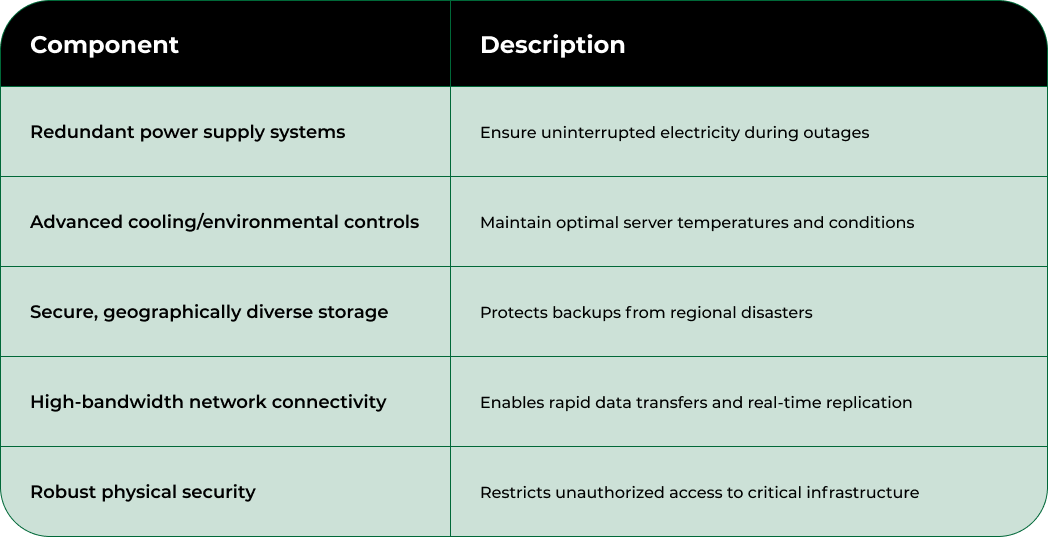
Key physical and technological infrastructure components include:
This table summarizes the key physical and technological components that are essential for a robust data center disaster recovery site, supporting rapid recovery and continuous operations.
According to Stanford University’s IT Disaster Recovery Plan Program, effective disaster recovery sites require comprehensive operational frameworks that extend beyond technological capabilities. Successful implementation demands clear organizational structures and predefined operational protocols.
Critical operational components include:
The most sophisticated disaster recovery sites integrate advanced data management strategies that ensure minimal information loss and rapid system restoration. Modern disaster recovery approaches leverage real-time data synchronization technologies, allowing organizations to maintain near-instantaneous backup of critical digital assets.
Advanced data management techniques involve:
By integrating these complex components, organizations create disaster recovery sites that are not merely backup facilities, but dynamic, responsive systems capable of maintaining operational integrity during the most challenging technological disruptions.

Data center disaster recovery sites function as complex, dynamically synchronized technological ecosystems designed to provide seamless operational continuity during unexpected disruptions. These sophisticated environments go far beyond simple backup systems, representing intricate networks of technological infrastructure, strategic planning, and real-time response mechanisms.
The operational core of disaster recovery sites revolves around continuous data mirroring and synchronization. Sophisticated replication technologies ensure that critical data remains consistently updated across primary and secondary locations, creating a near-instantaneous backup environment capable of immediate activation.
Key synchronization processes include:
According to the U.S. Department of the Interior’s Data Center Operations Guide, disaster recovery sites implement sophisticated failover protocols that enable rapid operational transitions. These mechanisms are designed to detect system failures and automatically redirect computational resources with minimal human intervention.
Critical failover components encompass:
Beyond technological infrastructure, disaster recovery sites maintain rigorous environmental and security controls to ensure consistent, protected operations. These sites function as fortified technological sanctuaries, equipped with multiple layers of physical and digital protection mechanisms.
Comprehensive management strategies include:
By integrating these complex operational strategies, data center disaster recovery sites transform potential vulnerabilities into robust, responsive technological ecosystems capable of maintaining organizational resilience during the most challenging technological disruptions.
Data center disaster recovery sites represent more than theoretical frameworks, transforming into critical lifelines for organizations across diverse industries. Real-world applications demonstrate the profound impact of robust disaster recovery strategies in protecting technological infrastructure and maintaining operational continuity during unprecedented challenges.
The financial services industry provides compelling evidence of disaster recovery’s strategic importance. When technological disruptions occur, milliseconds of downtime can translate into millions of dollars in potential losses. Banks and financial institutions have pioneered sophisticated disaster recovery approaches that minimize risk and ensure uninterrupted service.
Key financial sector disaster recovery characteristics include:
According to NIST’s Case Studies of Community Resilience, healthcare organizations demonstrate exceptional disaster recovery implementation. Medical institutions rely on uninterrupted data access to maintain patient care and critical research continuity.
Healthcare disaster recovery critical components involve:
Large technology corporations and cloud service providers represent the most advanced practitioners of disaster recovery strategies. These organizations design intricate, globally distributed recovery ecosystems that can seamlessly transition computational workloads across multiple geographic regions.
Enterprise-level disaster recovery strategies encompass:
These real-world applications illustrate how disaster recovery sites have evolved from simple backup systems into sophisticated, intelligent technological networks capable of maintaining organizational resilience during the most challenging operational disruptions.
When disaster threatens your data center, you need more than traditional backups. As the article explained, minimizing downtime and ensuring rapid failover require robust, enterprise-grade computing resources. If your organization struggles to find or deploy the right AI or HPC equipment for an effective disaster recovery site, you risk facing extended outages, lost data, or compliance failures. Imagine being able to rapidly scale, replace, or sell mission-critical hardware exactly when you need it most.
Ready to make your disaster recovery plan stronger and more responsive? Visit NodeStream by Blockware Solutions to unlock real-time access to verified, high-performance servers and AI-ready systems. Buy, sell, or scale GPU and HPC infrastructure with complete transparency and enterprise-grade support. Take action today to protect your operations and keep your business running — start building a disaster recovery solution that truly delivers. Explore solutions now
A data center disaster recovery site provides a strategic backup infrastructure to ensure business continuity during system failures or disasters, allowing organizations to maintain essential services and protect critical data.
The main types of disaster recovery sites are hot sites (fully operational and ready for immediate use), warm sites (partially configured and require some setup), and cold sites (minimal infrastructure that requires significant preparation).
Data center disaster recovery sites utilize advanced technologies for rapid data synchronization, failover mechanisms, and continuous monitoring to quickly transition operations to backup facilities with minimal disruption.
Key components include redundant power systems, advanced cooling solutions, secure data storage, high-bandwidth connectivity, operational protocols, clear team roles, and comprehensive data replication strategies.

AI computing is quietly redrawing the boundaries of crypto, finance, and high-performance computing. Brace yourself. By…

Artificial intelligence is turbocharging the world of finance as never before, shaking up how both…

Digital transformation is about to completely reshape how we use crypto and artificial intelligence in…


