


When critical systems go down, businesses can lose thousands to millions of dollars per hour. Most recovery plans promise quick fixes, but only deliver hours or even days of outage. The real secret is that a data center hot site can switch operations in minutes, keeping everything running almost instantly when disaster strikes.

A data center hot site represents a comprehensive disaster recovery solution designed to ensure rapid and seamless business continuity during unexpected system failures or catastrophic events. Unlike standard backup facilities, a hot site maintains a fully operational infrastructure that can immediately take over critical computing functions with minimal interruption.

A data center hot site is characterized by its real-time data synchronization and immediate operational readiness. Key attributes include:
According to NIST Special Publication 800-34, these facilities are engineered to provide near-instantaneous failover capabilities, ensuring organizations can maintain critical business processes during unexpected disruptions.
The operational mechanism of a data center hot site revolves around continuous data mirroring and redundant system architectures. This involves real-time data synchronization between primary and backup locations, ensuring that the hot site maintains an exact replica of the production environment. Specialized networking and storage technologies enable seamless data transfer and immediate switchover, minimizing potential downtime and preserving data integrity.
By maintaining a complete, up-to-date duplicate infrastructure, organizations can effectively protect against potential system failures, natural disasters, cybersecurity incidents, or other unforeseen events that could compromise their primary data center’s functionality. The hot site serves as a robust, immediate failsafe mechanism that guarantees business continuity and operational resilience.
Hot sites play a critical role in modern business resilience strategies, serving as a strategic safeguard against potential operational disruptions that could catastrophically impact organizational performance. By providing an immediate backup infrastructure, these specialized facilities ensure that critical business functions remain uninterrupted during unforeseen events.
The financial implications of system downtime are substantial. According to the Centers for Medicare & Medicaid Services, organizations can experience devastating economic consequences when critical systems fail. Potential losses can range from thousands to millions of dollars per hour of operational interruption, depending on the industry and scale of operations.
Key economic considerations for hot sites include:
Hot sites represent a sophisticated risk management approach that goes beyond traditional backup solutions. They provide a comprehensive disaster recovery strategy that addresses multiple potential scenarios, from localized infrastructure failures to large-scale regional disasters. By maintaining a fully operational parallel infrastructure, organizations can execute rapid failover protocols that preserve business integrity and minimize potential operational disruptions.
This proactive approach transforms disaster recovery from a reactive measure to a strategic business continuity tool. Hot sites enable organizations to maintain operational resilience, protect critical data assets, and demonstrate robust technological preparedness to stakeholders, investors, and regulatory bodies.
Data center hot sites operate through a sophisticated infrastructure design that enables seamless, instantaneous operational transitions during potential system disruptions. These advanced facilities leverage complex technological mechanisms to ensure continuous data synchronization and immediate failover capabilities.
The core functionality of hot sites revolves around real-time data mirroring and continuous system replication. According to Wikipedia, hot sites maintain a near-duplicate environment that can become fully operational within hours of a primary site failure. This process involves several critical technological components:
Redundant system architectures form the backbone of hot site functionality. These environments are engineered with multiple layers of technological safeguards that allow for immediate switchover. The infrastructure typically includes:
The technical design ensures that critical computing resources remain available, with minimal interruption to business processes. By maintaining a complete, real-time replica of the primary data center, hot sites can assume full operational responsibilities almost instantaneously, providing organizations with a robust disaster recovery solution that goes beyond traditional backup strategies.
A comprehensive data center hot site encompasses a complex ecosystem of technological infrastructure designed to ensure immediate operational continuity. Strategic integration of multiple critical components creates a robust environment capable of instantaneous system recovery and minimal business disruption.
The physical foundation of a hot site involves sophisticated hardware configurations that mirror the primary data center. According to NIST Special Publication 800-34, essential hardware components include:
Operational resilience depends on more than just hardware replication. Hot sites require sophisticated support infrastructure that ensures continuous functionality:
These intricate systems work synergistically to create a fully functional backup environment capable of assuming operational responsibilities within moments of a primary site failure.
This table summarizes the core components and systems that constitute a functional data center hot site, highlighting both hardware and technological support elements covered in the article.
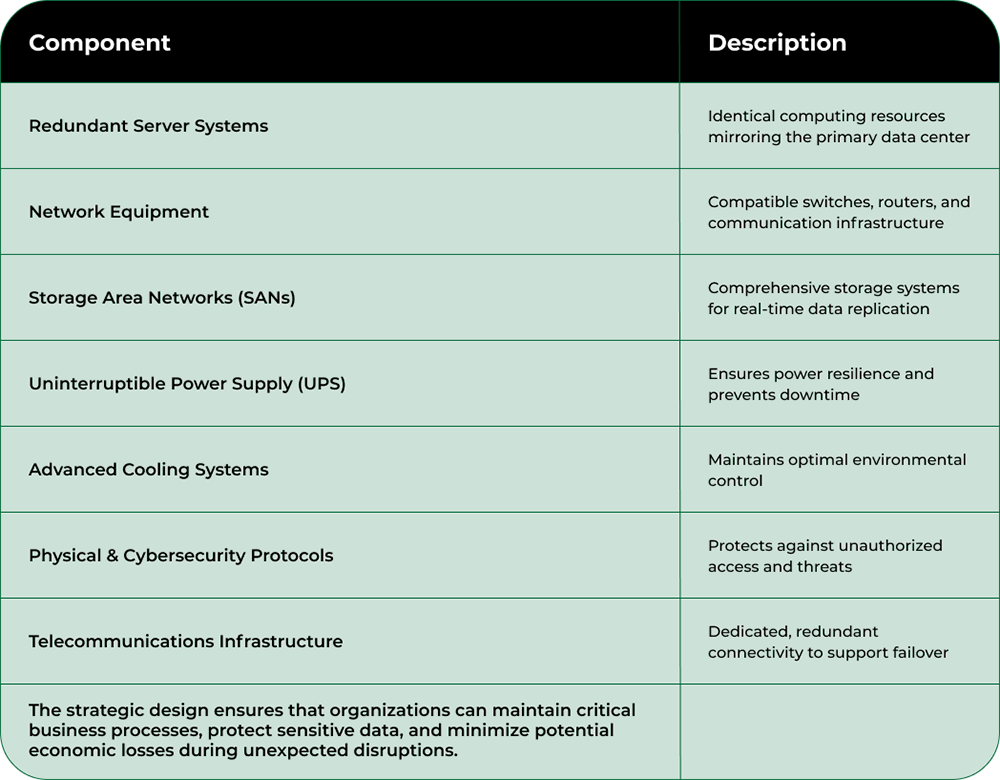
Data center hot sites represent a critical infrastructure strategy across multiple industries, providing organizations with robust disaster recovery and business continuity solutions. Strategic implementation varies significantly depending on organizational complexity, regulatory requirements, and operational risk profiles.
Financial institutions demonstrate some of the most sophisticated hot site deployments, where milliseconds of downtime can translate into substantial economic losses. These organizations require near-instantaneous data replication and failover capabilities to maintain transactional integrity and customer trust. Critical applications include:
Healthcare organizations leverage hot sites to protect patient data and ensure continuous access to critical medical systems. The ability to maintain uninterrupted operations during potential infrastructure failures is paramount. These environments support:

By implementing comprehensive hot site strategies, organizations across diverse sectors can mitigate operational risks, protect sensitive information, and maintain seamless service delivery during unexpected disruptions. The technological resilience provided by these advanced infrastructure solutions represents a fundamental approach to modern business continuity planning.
Safeguarding uptime is more important than ever, especially when the risks of operational interruptions and data loss can threaten your entire business. As discussed in this article, creating a dependable data center hot site means accessing real-time data replication, immediate failover, and enterprise-grade hardware. But managing all of this can feel overwhelming if you are still searching for reliable infrastructure partners or trying to find the right hardware at scale.
Why wait until disaster strikes? Secure your organization’s future and enable true business continuity. Visit Nodestream Marketplace to explore a transparent platform where you can find high-performance GPU servers, AI-ready systems, and scalable HPC equipment. Enjoy verified listings, swift bulk transactions, and personalized support that helps you build, upgrade, or back up your hot site environment instantly. Optimize your disaster recovery planning today by leveraging enterprise-grade compute assets tailored to your demanding workloads. Your critical operations deserve nothing less. Act now and experience a seamless way to protect and scale your computing environment.
A data center hot site is a fully operational backup facility designed to take over critical computing functions immediately during unexpected system failures or catastrophic events, ensuring rapid business continuity with minimal interruption.
The table below compares the defining features of hot sites versus cold sites, organizing the key differences identified in the article for quick reference.
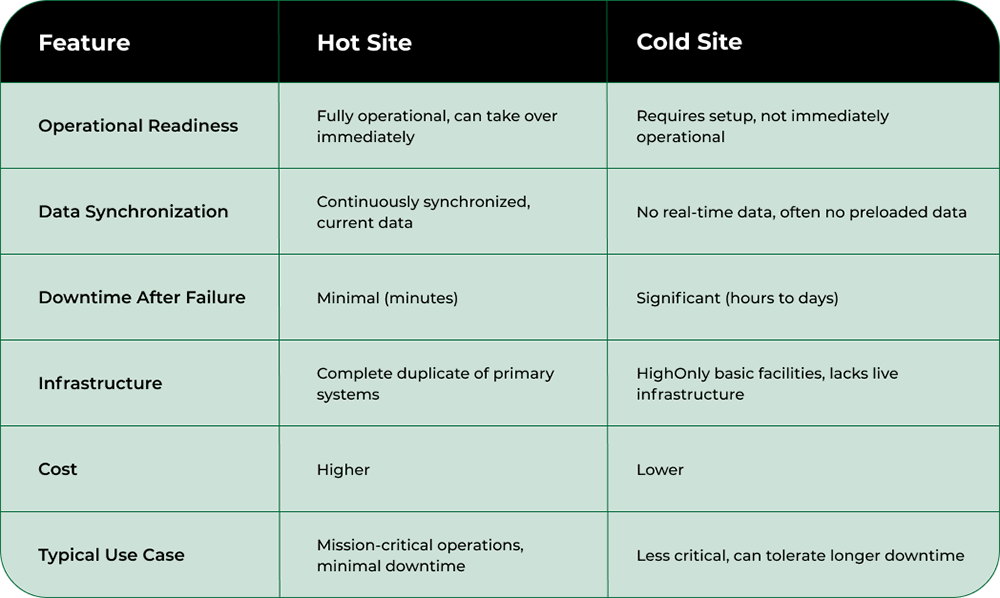
A hot site maintains current data and a fully operational infrastructure that allows immediate failover, whereas a cold site is merely a backup location that requires significant time to become operational from standby resources.
The primary benefits include minimized downtime, reduced revenue loss, maintained customer trust, and compliance with regulatory requirements. Hot sites provide organizations with a robust, immediate failsafe mechanism to ensure business continuity.
Essential technologies include wide-area network links for data transmission, specialized synchronization software, redundant computing resources, and continuous data mirroring systems. These technologies ensure seamless operational transitions during disruptions.

AI computing is quietly redrawing the boundaries of crypto, finance, and high-performance computing. Brace yourself. By…

Artificial intelligence is turbocharging the world of finance as never before, shaking up how both…

Digital transformation is about to completely reshape how we use crypto and artificial intelligence in…


