PCI data centers might sound like just another layer of security for handling payments. Surprisingly, non-compliance can lead to monetary fines so high that entire businesses have folded overnight. Most people assume these centers are only about following rules, but their real value is building a virtually impenetrable system that keeps not only data, but also the entire financial trust network safe from digital threats.
| Takeaway | Explanation |
|---|---|
| PCI data centers protect payment card information. | These specialized facilities meet stringent PCI DSS standards to secure sensitive financial data against breaches and cyber threats. |
| Compliance mitigates financial and legal risks. | Non-compliance can result in hefty fines, legal liabilities, and damage to reputation, emphasizing the need for adherence to PCI standards. |
| Advanced security technology is crucial. | PCI data centers utilize encryption, intrusion detection, and continuous monitoring to establish a layered security framework for data protection. |
| Network segmentation is essential for security. | Precise network design limits unauthorized access and isolates sensitive environments, enhancing overall data protection strategies. |
| Future trends focus on sustainability and AI. | Next-generation PCI data centers aim for energy efficiency and self-adapting security solutions, integrating AI to improve threat management and resource optimization. |
A PCI data center represents a specialized computing infrastructure designed specifically to process, store, and manage payment card information with the highest standards of security and compliance. These dedicated facilities are engineered to meet the rigorous requirements established by the Payment Card Industry Data Security Standard (PCI DSS), ensuring comprehensive protection for sensitive financial transaction data.
The fundamental objective of a PCI data center is to create an environment that minimizes risks associated with payment card information processing. By implementing multilayered security protocols, these centers provide a robust framework that protects cardholder data from potential breaches, unauthorized access, and cyber threats. According to IEEE Research, these specialized data centers are critical in maintaining the integrity of financial transaction ecosystems.
Key characteristics of PCI data centers include:
PCI data centers operate under a stringent compliance framework that mandates specific technical and operational requirements. These requirements cover multiple dimensions of data protection, including:
The architecture of these data centers is meticulously crafted to create multiple defensive layers, ensuring that payment card information remains protected throughout its entire lifecycle. By integrating advanced security technologies and adhering to comprehensive regulatory standards, PCI data centers serve as critical infrastructure for financial institutions, payment processors, and organizations handling sensitive transaction data.

The ultimate goal is not just compliance, but creating a resilient ecosystem that can effectively mitigate risks and maintain the trust of consumers and financial stakeholders in an increasingly complex digital transaction landscape.
Below is a table summarizing the key components and core security features commonly found in PCI data centers, helping clarify how each element contributes to overall data protection.
| Component / Feature | Description |
|---|---|
| Physical & Digital Access Controls | Restrict entry to authorized personnel and authenticated users |
| Network Segmentation | Isolates sensitive environments, limits unauthorized access |
| Advanced Encryption | Secures data during transmission and storage |
| Continuous Monitoring | Real-time surveillance to detect and respond to threats |
| Security Audits & Compliance | Regular assessments ensure ongoing regulatory adherence |
| Intrusion Detection/Prevention | Identifies and blocks malicious activities proactively |
| Secure Authentication Protocols/td> | Ensures only legitimate users access critical systems |
PCI compliance represents a critical framework that transforms data centers from mere storage facilities into secure fortresses protecting sensitive financial information. These comprehensive standards go far beyond basic security protocols, establishing a robust methodology for safeguarding payment card data throughout its entire lifecycle.
Non-compliance with Payment Card Industry Data Security Standards (PCI DSS) can result in catastrophic consequences for organizations. According to research from the University of North Texas, organizations face significant financial and legal risks when failing to meet these essential security requirements. Potential penalties include:
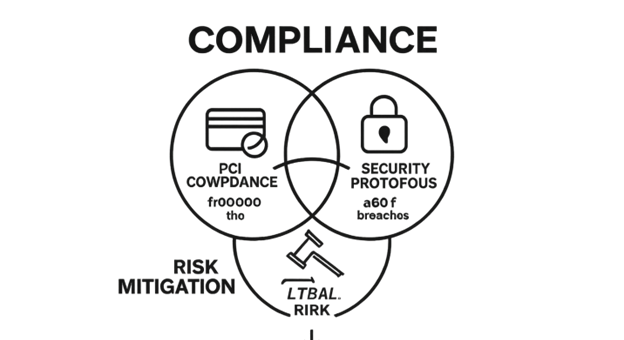
PCI compliance is not merely a checkbox exercise but a comprehensive security framework designed to protect intricate payment transaction ecosystems. The standards mandate rigorous security controls that address multiple dimensions of data protection, including:
By establishing these multilayered security approaches, data centers can create an environment that proactively prevents unauthorized access and potential cyber threats.
The goal extends beyond simple regulatory adherence to building a resilient infrastructure that can withstand increasingly sophisticated digital security challenges.
Ultimately, PCI compliance serves as a critical risk management strategy, transforming data centers into secure environments that protect not just data, but the financial integrity and trust of consumers and businesses alike.
PCI data centers represent complex technological ecosystems designed with intricate architectural strategies to ensure maximum security and compliance for payment card information processing. Their infrastructure goes beyond traditional data center designs, incorporating specialized hardware, network configurations, and robust security mechanisms that create multiple protective layers around sensitive financial data.
Network architecture forms the foundational element of PCI data centers, with precise segmentation being critical to maintaining data isolation and preventing unauthorized access. According to Stanford University IT guidelines, system components must be meticulously configured to minimize potential security vulnerabilities.
Key architectural considerations include:
The integration of security components represents a multifaceted approach in PCI data centers. Each technological element is strategically designed to work synergistically, creating a comprehensive defense mechanism that protects payment card information throughout its entire lifecycle.
Critical security integration elements encompass:
By developing a holistic security architecture, PCI data centers transform traditional computing environments into highly specialized, resilient platforms capable of withstanding sophisticated cyber threats while maintaining regulatory compliance and operational integrity.
PCI data center technologies have transcended their traditional role, emerging as critical infrastructure for complex computational environments across multiple industries. These advanced technological platforms now serve as foundational elements supporting sophisticated digital transformation strategies, particularly in domains requiring high-security data processing and advanced computational capabilities.
In the financial sector, PCI data centers play a pivotal role in managing complex transaction ecosystems. Banks, payment processors, and financial institutions rely on these secure infrastructures to handle millions of sensitive financial transactions daily. Our guide on AI computing infrastructure provides deeper insights into how these technologies are evolving.
Key financial applications include:
According to research from Taurus, PCI data center architectures are increasingly being adapted for cutting-edge machine learning and artificial intelligence research. These specialized environments provide the computational power and security necessary for processing complex algorithms and managing sensitive research data.
Critical research applications encompass:
By providing robust, secure, and scalable technological infrastructure, PCI data centers have transformed from mere storage facilities into dynamic ecosystems that drive innovation across multiple technological frontiers. Their ability to integrate advanced security protocols with high-performance computing capabilities makes them indispensable in today’s rapidly evolving digital landscape.
The following table contrasts the primary applications of PCI data center technologies across the main industries and environments mentioned, aiding understanding of their versatility and impact.
| Application Area | Example Use Cases |
|---|---|
| Financial Services | Real-time fraud detection, secure payment gateways, |
| high-frequency trading, blockchain transactions, | |
| cryptocurrency payment processing | |
| Research & ML | Genomic analysis, climate modeling, machine learning |
| model training, cryptographic research, high-performance | |
| computing workflows |
The landscape of PCI data centers is rapidly evolving, driven by emerging technologies, increasing security demands, and the need for more sustainable computing infrastructures. These technological shifts are reshaping how organizations approach data processing, security, and computational efficiency.
Sustainability has become a critical focus in next-generation PCI data center design. Explore our digital transformation strategies to understand the emerging trends. According to research analyzing laboratory server designs, future data centers will prioritize energy efficiency through:
Next-generation PCI data centers will leverage artificial intelligence and machine learning to create self-adapting security ecosystems. These intelligent systems will dynamically respond to emerging cybersecurity threats, offering unprecedented levels of protection for sensitive transaction data.
Key technological advancements include:
The convergence of advanced computational capabilities, enhanced security protocols, and sustainable design principles signals a transformative era for PCI data centers. These technological ecosystems are evolving from static infrastructure to dynamic, intelligent platforms that can adapt, protect, and optimize computational resources with unprecedented precision and efficiency.
Struggling with the intense security, compliance, and infrastructure complexity surrounding PCI data center architecture? As discussed in this article, maintaining advanced network segmentation, robust encryption, and compliance is no longer optional in enterprise payment and AI-driven environments. The cost and risk of falling behind are higher than ever, especially when you need to scale quickly or securely manage sensitive workloads.
Take control—leverage Nodestream to access enterprise-level GPU servers, customizable HPC assets, and AI-ready systems designed with your regulatory and security needs in mind. With our real-time verified listings, bulk order options, and full-spectrum logistics, you can modernize your PCI data center ecosystem at the pace your business demands. Explore our AI computing infrastructure overview or go directly to our platform homepage to get started. Secure your operations, protect your data, and power your innovation—now is the time to future-proof your data center strategy.
A PCI data center is designed to process, store, and manage payment card information securely, ensuring compliance with the Payment Card Industry Data Security Standard (PCI DSS) to protect sensitive financial transaction data.
PCI compliance helps organizations mitigate financial and legal risks related to data breaches by enforcing strict security protocols that protect payment card data, ultimately maintaining consumer trust and protecting financial integrity.
Key characteristics include strict physical and digital access controls, comprehensive network segmentation, advanced encryption mechanisms, continuous monitoring for threats, and regular security audits to ensure compliance and security of cardholder data.
PCI data centers are increasingly utilized in advanced research and machine learning environments, handling sensitive data for applications such as genomic analysis and high-performance computing, due to their robust security and processing capabilities.