Retiring IT equipment for AI and HPC environments sounds simple at first. The checklist gets long fast when you realize compliance regulations like GDPR, HIPAA, and CCPA can impact how every server is wiped, tracked, and resold. Most people focus only on data deletion and miss out on remarketing value, environmental rules, and audit trails waiting to cause problems later. The real opportunity is turning your decommissioning process into a source of revenue and security, not just disposal.
Decommissioning IT equipment represents a critical process for organizations managing high-performance computing and AI infrastructure. The strategic approach to retiring hardware ensures data security, environmental responsibility, and potential financial recovery. Green PC Technology highlights the complexity of this process, emphasizing the need for comprehensive planning and execution.
Before initiating the decommissioning process, organizations must conduct a thorough inventory of their IT equipment. This step involves documenting every piece of hardware, including servers, GPUs, networking equipment, and storage systems. Detailed documentation should capture serial numbers, configuration details, current performance metrics, and potential resale value. For AI and HPC environments, this becomes even more critical given the high-value nature of specialized computing infrastructure.
Specialized tracking systems can help streamline this process, enabling precise identification of each asset. Organizations should create a comprehensive database that captures not just basic hardware information, but also maintenance history, performance logs, and potential upgrade opportunities. This granular approach helps in making informed decisions about equipment retirement and potential remarketing strategies.
Data security represents the most crucial aspect of IT equipment decommissioning. Jetico recommends implementing rigorous data erasure protocols that go beyond simple file deletion. For AI and HPC environments handling sensitive research data or proprietary machine learning models, the stakes are particularly high.
Organizations must also ensure compliance with industry regulations such as NIST guidelines and data protection standards. Documentation of the entire data erasure process becomes critical for audit trails and potential legal requirements.
Responsible decommissioning extends beyond data security to include environmental considerations and potential financial recovery. Sustainable disposal methods can help organizations minimize electronic waste and potentially generate revenue through equipment resale or component recycling.
Key strategies include partnering with certified e-waste recyclers, exploring remarketing opportunities for still-functional hardware, and identifying components that can be repurposed or sold to specialized hardware resellers. For high-performance computing equipment like GPU servers and AI infrastructure, there is often a robust secondary market that can provide significant financial returns.
| Takeaway | Explanation |
|---|---|
| Conduct a comprehensive asset inventory. | Document every hardware piece, including serial numbers and configurations, for informed decommissioning decisions. |
| Implement rigorous data erasure protocols. | Use techniques like multi-pass overwriting and cryptographic erasure to ensure sensitive data is completely and permanently destroyed. |
| Focus on environmental responsibility in disposal. | Partner with certified e-waste recyclers and explore remarketing to minimize electronic waste while recovering value from old IT equipment. |
| Adhere to compliance standards throughout the process. | Ensure processes meet industry regulations like GDPR and HIPAA, documenting compliance efforts for audits and legal protection. |
| Evaluate the financial potential of high-value equipment. | Assess market demand and resale value for assets like GPU servers to maximize financial returns during decommissioning. |
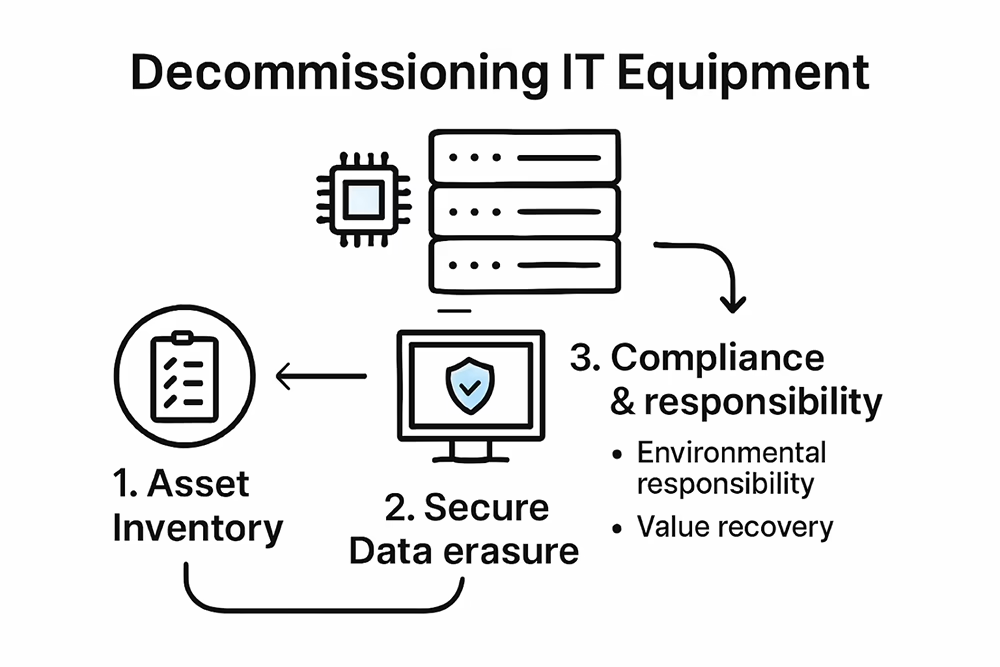
Decommissioning IT equipment represents a critical process for organizations managing high-performance computing and AI infrastructure. The strategic approach to retiring hardware ensures data security, environmental responsibility, and potential financial recovery. Green PC Technology highlights the complexity of this process, emphasizing the need for comprehensive planning and execution.
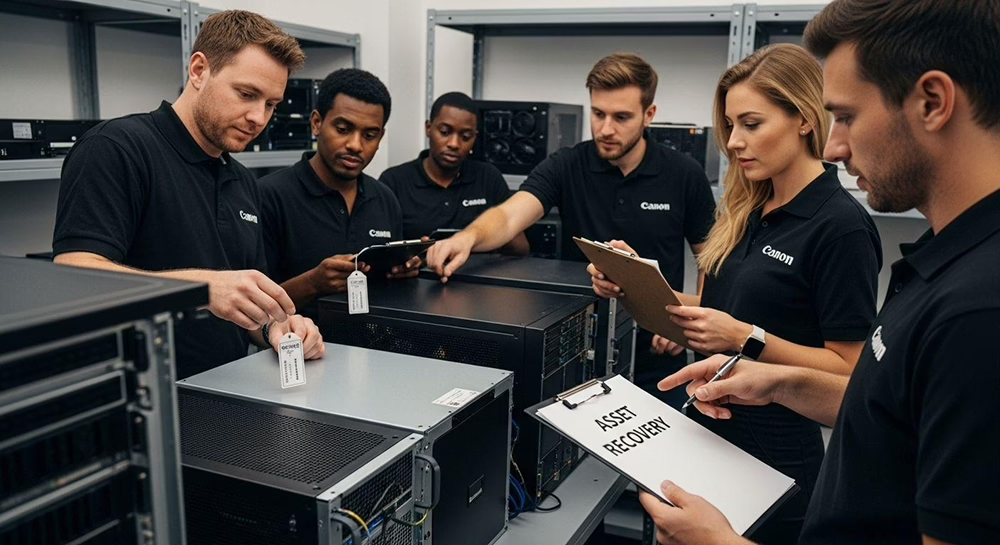
Before initiating the decommissioning process, organizations must conduct a thorough inventory of their IT equipment. This step involves documenting every piece of hardware, including servers, GPUs, networking equipment, and storage systems. Detailed documentation should capture serial numbers, configuration details, current performance metrics, and potential resale value. For AI and HPC environments, this becomes even more critical given the high-value nature of specialized computing infrastructure.
Specialized tracking systems can help streamline this process, enabling precise identification of each asset. Organizations should create a comprehensive database that captures not just basic hardware information, but also maintenance history, performance logs, and potential upgrade opportunities. This granular approach helps in making informed decisions about equipment retirement and potential remarketing strategies.
Data security represents the most crucial aspect of IT equipment decommissioning. Jetico recommends implementing rigorous data erasure protocols that go beyond simple file deletion. For AI and HPC environments handling sensitive research data or proprietary machine learning models, the stakes are particularly high.
Organizations must also ensure compliance with industry regulations such as NIST guidelines and data protection standards. Documentation of the entire data erasure process becomes critical for audit trails and potential legal requirements.
Responsible decommissioning extends beyond data security to include environmental considerations and potential financial recovery. Sustainable disposal methods can help organizations minimize electronic waste and potentially generate revenue through equipment resale or component recycling.
Key strategies include partnering with certified e-waste recyclers, exploring remarketing opportunities for still-functional hardware, and identifying components that can be repurposed or sold to specialized hardware resellers. For high-performance computing equipment like GPU servers and AI infrastructure, there is often a robust secondary market that can provide significant financial returns.
By following these structured steps, organizations can transform equipment decommissioning from a potential liability into a strategic process that balances data security, financial optimization, and environmental responsibility.
To help clarify and compare the primary secure data erasure methods mentioned, the following table summarizes each method’s approach and typical application:
| Data Erasure Method | Description | Typical Use Case |
|---|---|---|
| Multi-Pass Overwriting | Repeatedly overwriting data on storage devices to erase content | Standard practice for most equipment |
| Cryptographic Erasure | Destroying encryption keys to make data unrecoverable | Encrypted drives/models |
| Physical Destruction | Physically destroying drives or hardware to eliminate data | Highly sensitive/confidential drives |
In the rapidly evolving landscape of AI and high-performance computing, managing risks and ensuring regulatory compliance represents a complex challenge for organizations. NIST emphasizes that effective governance requires comprehensive protocols addressing technological, legal, and operational dimensions.
The regulatory environment for AI and HPC assets is increasingly intricate, demanding meticulous attention to multiple compliance frameworks. Organizations must navigate a complex web of regulations including GDPR, CCPA, HIPAA, and industry-specific standards that govern data handling, privacy, and security. Read more about HPC infrastructure challenges to understand the broader context of these compliance requirements.
The IT Asset Management Group highlights that operational risks in AI and HPC environments extend far beyond simple hardware management. Organizations must develop comprehensive risk mitigation strategies that address potential vulnerabilities in infrastructure, data handling, and system integrity.
Sphaera underscores that modern AI and HPC asset management requires more than technical compliance. Organizations must also address emerging ethical considerations surrounding AI deployment, data usage, and potential algorithmic biases.
Successful risk management in AI and HPC environments demands a holistic approach that balances technological capabilities, regulatory requirements, and ethical considerations. Organizations must remain agile, continuously updating their strategies to address evolving technological and regulatory landscapes.
To provide a clear reference to the major compliance frameworks and their focus areas mentioned above, refer to the summary table below:
| Regulation / Standard | Focus Area | Key Relevance in Decommissioning |
|---|---|---|
| GDPR | Data privacy, right to erasure | Personal data deletion |
| HIPAA | Health data privacy/security | Handling patient/research info |
| CCPA | Consumer privacy/opt-out requirements | Consumer data asset handling |
| NIST Guidelines | Cybersecurity & data handling standards | Security, documentation, audits |
In the high-stakes world of AI and HPC infrastructure, asset disposal represents a critical intersection of financial strategy and data security. Organizations must approach equipment retirement with a sophisticated methodology that balances economic optimization with stringent data protection protocols. Learn more about enterprise computing infrastructure to understand the broader context of these complex considerations.
The Internal Revenue Service provides critical insights into comprehensive media sanitization processes. Effective data wiping goes far beyond simple file deletion, requiring multi-layered approaches that completely eliminate potential data reconstruction risks. For AI and HPC environments handling sensitive computational assets, this becomes paramount.
Organizations must develop systematic verification protocols that document every stage of the data wiping process. This not only ensures security but also provides critical audit trails for potential regulatory reviews.
The Centers for Medicare & Medicaid Services emphasize the importance of methodical asset disposition strategies. High-performance computing equipment represents significant financial investment, making strategic disposal crucial for recovering maximum value.
Successful asset disposal requires a nuanced understanding of secondary markets, particularly for specialized AI and machine learning hardware. GPU servers, advanced networking equipment, and high-density computational systems often retain substantial value when properly maintained and marketed.
Compliance and Environmental Responsibility
Modern asset disposal transcends mere financial considerations, encompassing robust compliance frameworks and environmental sustainability. Organizations must navigate complex regulatory landscapes while minimizing electronic waste and supporting circular economy principles.
By implementing a holistic approach to data wiping and asset disposal, organizations can transform what might be perceived as a cost center into a strategic opportunity. Careful planning, rigorous security protocols, and market-aware disposition strategies enable enterprises to maximize financial returns while maintaining the highest standards of data protection and regulatory compliance.
Decommissioning high-value GPU servers demands a meticulous and strategic approach that goes beyond standard IT equipment retirement protocols. These specialized computational assets represent significant financial investment and contain critical infrastructure for AI and high-performance computing environments. Explore advanced computing infrastructure strategies to understand the nuanced considerations involved in this process.
University at Buffalo’s Equipment Management Procedure emphasizes the importance of thorough initial assessment before equipment retirement. For GPU servers, this process involves detailed performance and health diagnostics that go beyond basic operational checks.
Thorough assessment helps organizations determine whether servers are candidates for remarketing, internal redeployment, or complete retirement. This strategic approach maximizes potential financial recovery and ensures optimal resource utilization.
The National Forum on Education Statistics highlights the critical nature of data management during equipment decommissioning. For GPU servers used in AI and machine learning environments, data extraction and protection become extraordinarily complex due to the specialized nature of computational workloads.
Organizations must develop customized data extraction protocols that recognize the unique computational ecosystems embedded within high-performance GPU infrastructure.
Argonne National Laboratory underscores the importance of sustainable and economically strategic equipment disposition. High-value GPU servers represent complex assets with potential secondary market opportunities that extend far beyond traditional hardware resale.
Successful GPU server decommissioning requires a holistic approach that balances technological, financial, and environmental considerations. By implementing rigorous assessment, data protection, and disposition strategies, organizations can transform equipment retirement from a potential liability into a strategic asset management opportunity.
The key steps include conducting a comprehensive asset inventory, implementing secure data erasure protocols, ensuring environmental responsibility, and adhering to compliance standards throughout the process.
Organizations can ensure secure data erasure by using methods such as multi-pass overwriting, cryptographic erasure, and certified physical destruction of hardware to render data irretrievable.
Organizations must consider compliance regulations such as GDPR, HIPAA, and CCPA, which govern data privacy and protection standards during the decommissioning process.
Remarketing IT equipment can generate revenue, help recover some financial value, and reduce electronic waste by allowing still-functional hardware to be sold or repurposed for use in other applications.
Decommissioning specialized AI and HPC equipment is stressful. You need verified compliance, secure data erasure, and assurance that high-value GPU servers or AI-ready systems are not just written off as a loss. If you are looking to create an audit-ready process that also recovers value in real time, you do not have to handle it alone.
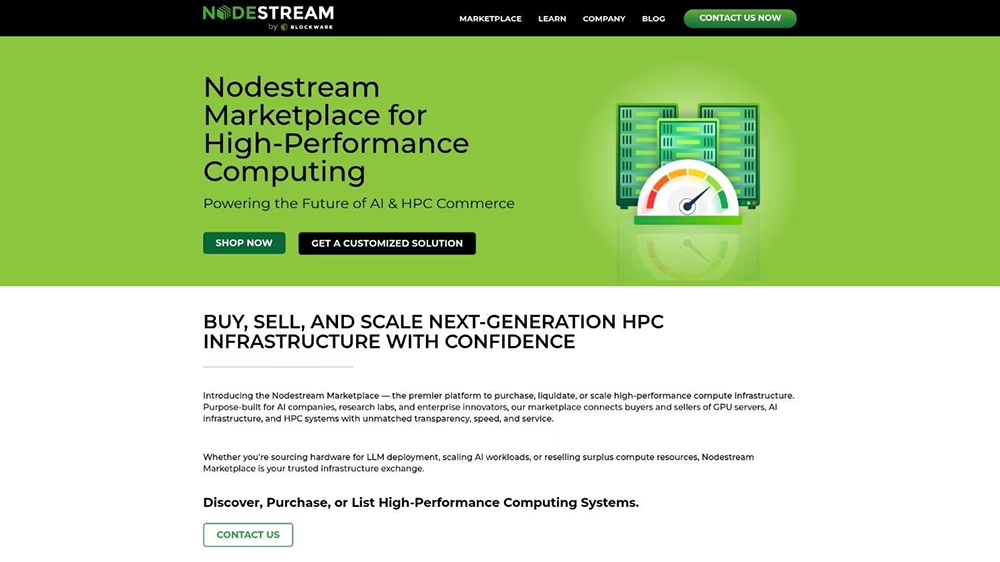
Thousands of organizations trust NodeStream’s enterprise marketplace to safely resell servers, acquire AI infrastructure, and seamlessly manage the transition between technologies. Our platform features rapid bulk ordering, real-time inventory, and full support for logistics and secure hardware redeployment. By partnering with a transparent, enterprise-grade marketplace you can transform legacy equipment challenges into strategic wins and speed up every transaction. Discover how easy it is to unlock new value from your assets today. Start your secure, efficient hardware transition at https://nodestream.blockwaresolutions.com.