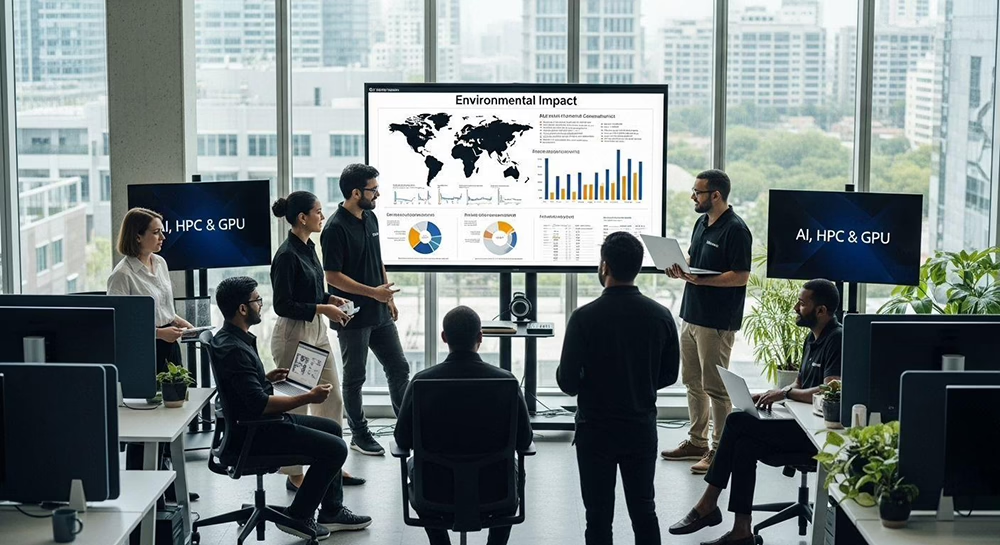
AI and high-performance computing are set to consume a stunning up to 8 percent of global electricity by 2030. Most people guess that renewable energy might keep everything green and under control. But as data centers expand and GPU servers multiply, it turns out that the real challenge is not just the energy they use but the carbon emissions baked right into the manufacturing of all that hardware. Get ready to rethink what sustainable computing really means.
| Takeaway | Explanation |
|---|---|
| AI and HPC growth drives energy consumption | AI and high-performance computing systems are creating significant energy demands, potentially consuming up to 8% of global electricity by 2030. |
| Environmental costs of GPU servers are high | Manufacturing and operating modern GPU servers results in substantial carbon emissions due to energy use and complex manufacturing processes. |
| Sustainable data centers require innovative strategies | Future data centers must integrate renewable energy, advanced cooling technologies, and circular economy principles to reduce their carbon footprint. |
| Advanced semiconductors can cut energy use | New semiconductor technologies have the potential to reduce energy consumption by up to 50%, improving overall computational efficiency. |
| AI can optimize energy management in computing | AI algorithms can dynamically manage energy resources, optimizing cooling and workload distribution to minimize environmental impact. |
The exponential growth of artificial intelligence and high-performance computing is creating unprecedented energy consumption challenges for global computing infrastructure. As computational demands surge, the environmental impact of computing becomes increasingly critical, pushing organizations to confront the substantial power requirements of emerging technologies.
Artificial intelligence and high-performance computing systems are consuming electricity at an alarming rate. Research from Lawrence Berkeley National Laboratory indicates that data centers and AI computing infrastructure could consume up to 8% of global electricity by 2030, a dramatic increase from current levels. The energy demands are driven by complex computational processes that require massive GPU clusters and sophisticated cooling systems.
GPU-based systems, particularly those used in machine learning and scientific simulations, represent the most energy-intensive computing environments. A single high-performance GPU server can consume between 300-500 watts per hour, with large-scale AI training clusters potentially drawing megawatts of power continuously. These energy requirements translate into significant carbon emissions and environmental strain.
The computational complexity of modern AI models exponentially increases energy consumption. A study by MIT Technology Review reveals that training large language models can generate carbon emissions equivalent to multiple transatlantic flights. This environmental cost underscores the urgent need for more energy-efficient computing architectures.
Enterprise organizations and research institutions are now confronting a critical challenge: balancing computational performance with sustainable energy practices. The demand for AI and HPC capabilities continues to grow across industries including scientific research, financial modeling, climate simulation, and machine learning, creating pressure to develop more energy-efficient computing solutions.
The environmental impact of computing is no longer a peripheral concern but a central consideration in technological development. As our guide on AI computing infrastructure demonstrates, organizations must prioritize energy efficiency alongside computational performance to mitigate the growing ecological footprint of advanced computing systems.
Innovative approaches such as liquid cooling, more efficient semiconductor designs, and renewable energy integration are emerging as potential strategies to address these escalating energy demands. The future of high-performance computing will depend on successfully balancing technological advancement with environmental responsibility.
The escalating computational power of modern GPU servers comes with a substantial environmental cost that demands critical examination. Modern hardware infrastructure, particularly in high-performance computing and artificial intelligence applications, generates a complex carbon footprint that extends far beyond immediate energy consumption.
The production of GPU servers involves significant carbon emissions even before the hardware becomes operational. Research from Nature Climate Change reveals that manufacturing a single high-performance GPU server can generate between 1,000 to 2,500 kilograms of carbon dioxide equivalent during its production cycle. These embedded emissions represent a critical component of the total environmental impact that is frequently overlooked by technological assessments.
Semiconductor manufacturing processes require extensive energy resources and rare earth minerals, creating a complex supply chain with substantial ecological implications. The extraction, processing, and transportation of materials like silicon, copper, and rare metals contribute significantly to the overall carbon footprint of GPU hardware.
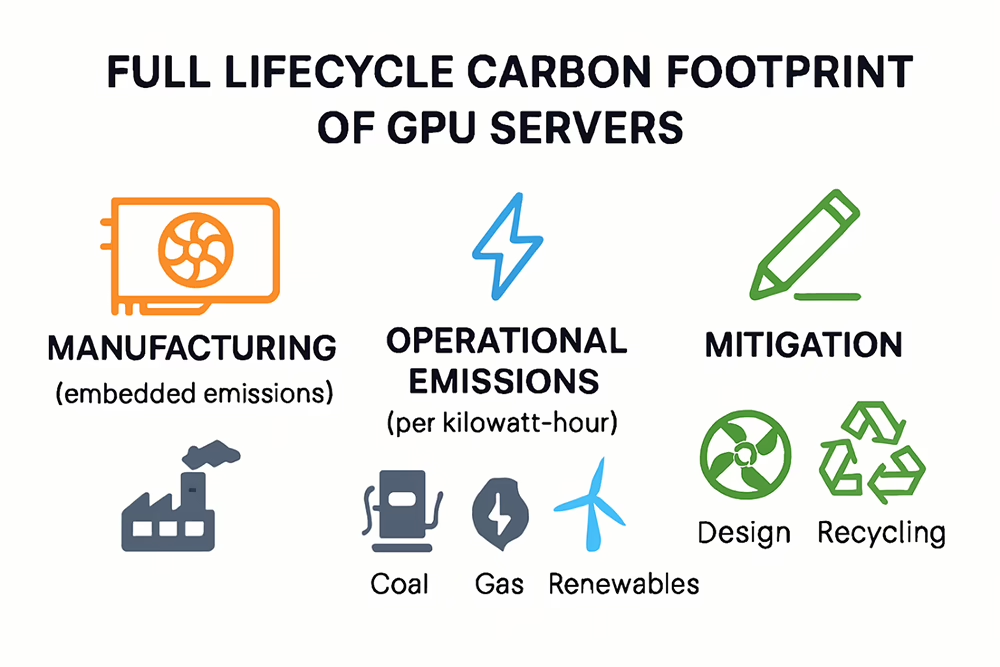
Beyond manufacturing, GPU servers generate continuous carbon emissions during their operational lifecycle. A comprehensive study by Berkeley Lab demonstrates that enterprise-grade GPU clusters can produce approximately 0.5 to 1.2 metric tons of carbon dioxide per kilowatt-hour of computational work, depending on regional electricity grid composition and cooling infrastructure.
| Factor | Impact on Carbon Intensity | Example/Explanation |
|---|---|---|
| Energy Source Composition | High on fossil fuel grids, lower on renewables | Renewable grids reduce operational emissions |
| Computational Efficiency | Greater efficiency reduces emissions per task | New GPU architectures use less energy per computation |
| Cooling Infrastructure | Efficient cooling lowers total carbon output | Liquid cooling reduces energy vs. traditional air-cooling |
Technology manufacturers are increasingly focusing on developing more sustainable GPU server designs. Our guide on AI computing infrastructure highlights emerging strategies for reducing the carbon footprint of computational hardware.
The future of sustainable computing depends on a holistic approach that considers carbon emissions across the entire lifecycle of GPU servers. Organizations must prioritize not just computational performance, but also the environmental impact of their technological infrastructure. As computational demands continue to grow, innovative solutions that balance technological advancement with ecological responsibility will become increasingly critical.
The next generation of data centers demands a radical reimagining of computational infrastructure through comprehensive sustainability strategies. As artificial intelligence and high-performance computing continue to expand, organizations must develop innovative approaches that minimize environmental impact while maintaining cutting-edge technological performance.
Research from the International Energy Agency indicates that data centers could potentially consume up to 8% of global electricity by 2030, making renewable energy integration a critical priority. Advanced data centers are now implementing sophisticated strategies to achieve carbon neutrality, including direct renewable energy procurement, on-site solar and wind generation, and strategic power purchase agreements with green energy providers.
Cooling infrastructure represents one of the most significant energy consumption areas in modern data centers. A study by Nature reveals that traditional air cooling methods can consume up to 40% of a data center’s total energy expenditure. Next-generation data centers are adopting breakthrough cooling technologies that dramatically reduce energy requirements.
Our comprehensive guide on AI computing infrastructure highlights the emerging trend of circular economy principles in data center design. Modern sustainable strategies focus not just on operational efficiency but on the entire lifecycle of computational hardware.
| Sustainability Strategy | Purpose/Benefit | Example Application |
|---|---|---|
| Renewable Energy Integration | Reduce operational carbon emissions | Direct sourcing from wind/solar providers |
| Advanced Cooling Technologies | Lower energy usage for cooling systems | Liquid immersion or phase change cooling |
| Circular Economy Practices | Extend hardware lifespan, reduce e-waste | Modular design and material recovery |
| Carbon Offset Programs | Achieve carbon neutrality for operations | Investing in reforestation projects |
The future of sustainable data centers requires a holistic approach that integrates renewable energy, advanced cooling technologies, and circular economy principles. Organizations must view sustainability not as a constraint but as a strategic opportunity for technological innovation and environmental responsibility. By implementing these comprehensive strategies, data centers can significantly reduce their carbon footprint while maintaining the high-performance computing capabilities demanded by artificial intelligence and scientific research.
The escalating environmental challenges posed by high-performance computing and artificial intelligence are driving unprecedented technological innovations aimed at reducing carbon footprints and improving computational efficiency. As global computational demands continue to surge, breakthrough technologies are emerging that promise to transform the ecological landscape of computing infrastructure.
Advanced Semiconductor Design and Energy Efficiency
Research from IEEE reveals that next-generation semiconductor architectures could potentially reduce energy consumption by up to 50% compared to current technologies. Emerging technologies like gallium nitride and silicon carbide semiconductors offer dramatically improved energy efficiency, enabling more computational work with significantly reduced power requirements.
Artificial intelligence itself is becoming a powerful tool for reducing computational environmental impact. A study by MIT Technology Review demonstrates that AI algorithms can optimize energy consumption in computing infrastructure by predicting and dynamically adjusting computational resources.

Our comprehensive guide on AI computing infrastructure highlights the emerging trend of developing holistic sustainable computing ecosystems. This approach transcends individual technological solutions, focusing on creating comprehensive frameworks that integrate energy efficiency, renewable resources, and intelligent design principles.
The future of sustainable computing demands a multifaceted approach that combines advanced technological innovation, intelligent design, and a commitment to environmental responsibility. As computational demands continue to grow exponentially, these technological innovations represent critical pathways toward reducing the environmental impact of computing while maintaining and expanding technological capabilities.
AI and high-performance computing (HPC) are projected to consume up to 8% of global electricity by 2030.
GPU servers generate significant carbon emissions primarily through the energy required for manufacturing and operation, with manufacturing alone releasing between 1,000 to 2,500 kilograms of CO2 equivalent per server.
Data centers can integrate renewable energy, adopt advanced cooling technologies, and implement circular economy principles to minimize their environmental impact.
AI can optimize energy management by dynamically adjusting workload distribution, improving cooling management, and monitoring real-time energy consumption for efficiency.
The pressure on organizations to balance high-performance computing demands with urgent sustainability goals is growing fast. If you are struggling with the high energy footprint of expanding GPU clusters or looking for a smarter way to tackle embedded carbon emissions, you are not alone. This article highlights how modern compute infrastructure can strain your resources and your environmental commitments. It also explores why scalable solutions and responsible lifecycle practices are now essential for any enterprise or research institution invested in AI and HPC.

Act now to future-proof your data operations and shrink your environmental impact. Explore https://nodestream.blockwaresolutions.com, the marketplace made for those who demand verified, energy-efficient, and AI-ready hardware worldwide. Benefit from real-time inventory, fast transactions, and end-to-end service for efficient procurement or surplus liquidation. Stay ahead of the sustainability curve by choosing a platform that makes responsible computing achievable today. Visit https://nodestream.blockwaresolutions.com to see how you can power smarter, greener infrastructure now.