High-performance computing data centers are stepping into a new era where bold breakthroughs seem to appear every month. Cooling systems are getting a lot of hype and for good reason, with AI-powered systems slashing energy use by up to 21 percent—a leap that sounds almost too good to be true. But most people are looking at the hardware or power savings when the most radical shift is happening behind the scenes as data centers quietly transform into adaptive, intelligent ecosystems that can almost manage themselves.
| Takeaway | Explanation |
|---|---|
| Next-gen GPUs enhance computational power | Advanced GPU servers significantly increase performance for AI, machine learning, and scientific tasks. |
| Innovative cooling improves energy efficiency | Liquid cooling and AI-managed systems optimize thermal management, boosting operational reliability in data centers. |
| Intelligent power systems predict demands | Smart power distribution adapts to real-time computing needs, minimizing energy waste and ensuring efficiency. |
| Adaptive networking enhances performance | Reconfigurable networks optimize resource flow and reduce latency, crucial for high-performance computing workloads. |
| AI-driven data centers optimize resources | Intelligent infrastructure dynamically reallocates computing power and cooling, ensuring flexibility and sustainability in operations. |
The landscape of high-performance computing is experiencing a radical transformation driven by unprecedented advancements in GPU server technologies. In 2025, data centers are witnessing a quantum leap in computational capabilities that promise to redefine artificial intelligence, machine learning, and complex scientific computing.
Next-generation GPU servers are pushing the boundaries of computational density and energy efficiency. Learn more about enterprise HPC infrastructure as we explore the cutting-edge technologies emerging in this critical domain. The ABCI 3.0 system, operated by Japan’s National Institute of Advanced Industrial Science and Technology, represents a pivotal milestone. This massive AI infrastructure integrates 6,128 NVIDIA H200 GPUs, achieving an extraordinary peak performance of 6.22 exaflops in half precision and 3.0 exaflops in single precision.
Advanced liquid-cooled architectures are becoming standard, with manufacturers like Hewlett Packard Enterprise introducing innovative solutions. The HPE Cray Supercomputing EX4252 Gen 2 Compute Blade and EX154n Accelerator Blade exemplify this trend, featuring direct liquid cooling technologies that accommodate up to 224 NVIDIA Blackwell GPUs while dramatically improving energy efficiency and thermal management.
The future of GPU servers extends beyond raw computational power. Enterprise solutions are now focusing on modular, scalable designs that can rapidly adapt to evolving AI and machine learning workloads. Integrated systems like the HPE Private Cloud AI developer platform demonstrate a holistic approach to high-performance computing infrastructure.
The convergence of AI, machine learning, and high-performance computing is driving these technological breakthroughs. Manufacturers are developing increasingly specialized hardware that can handle complex, data-intensive workloads with unprecedented speed and efficiency. As computational demands continue to escalate, these next-generation GPU servers represent not just an incremental improvement, but a fundamental reimagining of computational infrastructure.
To help readers understand the major advances and comparisons between GPU server solutions mentioned, the following table summarizes key features of highlighted next-gen GPU hardware systems:
| System/Hardware | GPU Count | Cooling Method | Peak Performance | Notable Feature |
|---|---|---|---|---|
| ABCI 3.0 | 6,128 NVIDIA H200 | Likely liquid | 6.22 exaflops (HP), 3.0 exaflops (SP) | Massive AI infrastructure |
| HPE Cray EX4252 Gen 2 Compute Blade | Up to 224 Blackwell | Direct liquid | Not specified | Advanced energy efficiency |
| HPE Cray EX154n Accelerator Blade | Up to 224 Blackwell | Direct liquid | Not specified | Enhanced thermal management |
| HPE Private Cloud AI developer platform | Not specified | Not specified | Not specified | Modular & scalable AI solution |
Data center cooling and power management are undergoing transformative changes in 2025, driven by the escalating computational demands of high-performance computing and artificial intelligence infrastructure. These innovations are not merely incremental improvements but represent fundamental reimaginings of thermal and electrical management strategies.
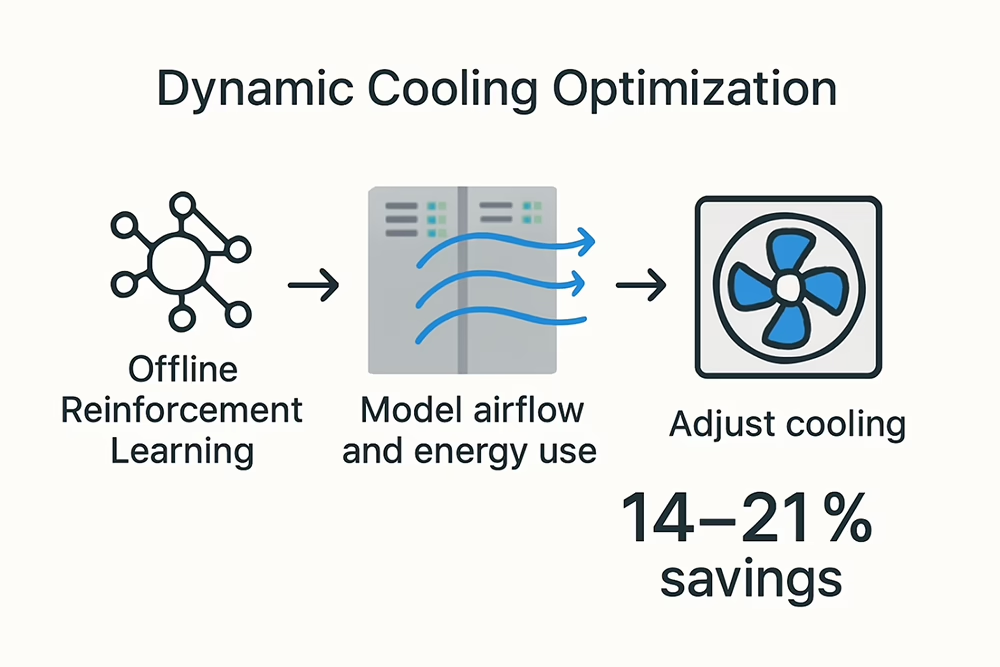
Traditional cooling methods are rapidly becoming obsolete as data centers require more sophisticated thermal solutions. Learn about enterprise energy optimization strategies to understand the critical challenges facing modern computational infrastructure. A groundbreaking research study titled ‘Data Center Cooling System Optimization Using Offline Reinforcement Learning’ introduces a revolutionary approach to cooling system efficiency. Researchers developed a physics-informed offline reinforcement learning framework that can model complex dynamical patterns inside server rooms using graph neural network architectures.
This innovative approach enables sample-efficient policy learning with limited real-world operational data, achieving remarkable energy savings of 14-21% in data center cooling systems without compromising operational safety or performance constraints. The method represents a significant leap forward in intelligent thermal management, leveraging artificial intelligence to optimize energy consumption dynamically.
Power management is evolving from a reactive to a predictive discipline. Modern data centers are implementing intelligent power distribution systems that can anticipate and adapt to fluctuating computational loads in real-time. These systems utilize advanced machine learning algorithms to forecast energy requirements, redistribute power dynamically, and minimize wastage.
The convergence of artificial intelligence, advanced sensor technologies, and sophisticated power electronics is enabling unprecedented levels of efficiency. Data centers are no longer viewed as static infrastructure but as living, adaptive ecosystems that can optimize their own thermal and electrical performance.
These innovations are not merely technical improvements but represent a fundamental shift in how we conceptualize computational infrastructure. By treating cooling and power systems as intelligent, interconnected networks rather than isolated components, organizations can achieve dramatic improvements in energy efficiency, operational reliability, and overall computational performance.
For a concise view of the energy savings and operational benefits provided by AI-powered cooling technologies and intelligent power management, see the table below:
| Solution Type | Technology/Approach | Energy Savings | Operational Benefit |
|---|---|---|---|
| AI-powered cooling | Physics-informed RL + GNNs | 14-21% | Maintains safety while cutting energy use |
| Direct liquid cooling | Direct immersion/flow liquid solutions | Not specified (implied) | Improved energy efficiency and thermal reliability |
| Intelligent power distribution | ML-powered adaptive allocation | Minimizes wastage | Meets real-time demand, boosts efficiency |
| Predictive thermal management | AI preemptive cooling adjustment | Not specified | Avoids overheating, ensures performance |
| Renewable energy integration | Power management with renewables | Not specified | Maintains consistent performance with green power |
Networking technologies are undergoing a profound transformation in high-performance computing, becoming increasingly critical to supporting the massive computational demands of artificial intelligence and complex scientific workloads. Explore the fundamentals of HPC infrastructure to understand the intricate challenges driving these technological advancements.
A groundbreaking approach to datacenter networking is emerging through reconfigurable datacenter networks (RDCNs), which dynamically adjust network topologies based on real-time computational requirements. Researchers exploring network optimization have developed innovative frameworks that can reshape network architectures to maximize performance and efficiency.
These advanced networking solutions leverage artificial intelligence and machine learning algorithms to create adaptive network infrastructures. By intelligently redistributing network resources, organizations can achieve unprecedented levels of computational flexibility. The ability to dynamically reconfigure network topologies allows for optimized data flow, reduced latency, and more efficient resource utilization across complex computing environments.
Security and performance are converging in next-generation networking technologies. The National Institute of Standards and Technology has been at the forefront of addressing the complex security challenges inherent in modern high-performance computing networks.
Research from leading academic institutions, such as Johns Hopkins University’s advanced computer networks program, highlights the critical role of sophisticated networking technologies in supporting next-generation computational workloads. These networks are no longer simple communication infrastructures but intelligent, adaptive systems that can anticipate and respond to complex computational requirements.
The convergence of artificial intelligence, advanced security protocols, and dynamic network architectures represents a fundamental reimagining of how computational resources communicate and interact. As computational workloads become increasingly complex and data-intensive, these advanced networking solutions will play a crucial role in enabling breakthrough scientific and technological innovations.
The landscape of data center technologies is experiencing a profound transformation, driven by the escalating demands of artificial intelligence and high-performance computing. Explore advanced AI computing infrastructure strategies to understand the intricate evolution of modern computational environments.
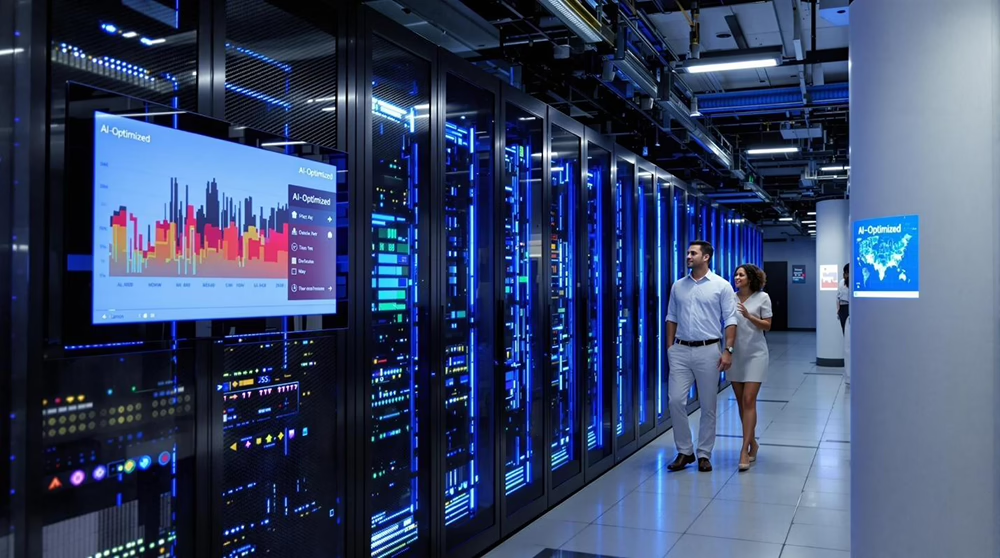
AI-optimized data centers are redefining computational flexibility through intelligent resource management. Research from IDC reveals a significant trend toward compute and storage resource repatriation, with approximately 80% of survey respondents anticipating infrastructure redistribution in the next 12 months. This cloud rebalancing strategy allows organizations to optimize workload distribution, particularly for AI development and storage requirements.
Advanced data centers are implementing sophisticated power management techniques that offer unprecedented economic advantages. Innovative research indicates that AI-focused HPC data centers can deliver greater flexibility at 50% lower cost compared to traditional infrastructures. By strategically scheduling computing jobs, these centers can manage power demand, alleviate network stress, and contribute to dynamic power system balancing with minimal additional infrastructure investment.
Thermal management has become a critical frontier in AI-optimized data center design. Comprehensive studies demonstrate remarkable advancements in cooling technologies. Thermal densities have dramatically increased from 8-12 kW per rack in 2023 to 28-45 kW per rack in 2025, with AI-managed cooling systems maintaining extraordinary thermal stability.
The emergence of these AI-optimized data centers represents more than technological advancement. It signifies a fundamental reimagining of computational infrastructure as a living, adaptive ecosystem. By leveraging artificial intelligence to manage power, thermal conditions, and resource allocation, organizations can create more responsive, efficient, and scalable computing environments.
As computational demands continue to escalate, these intelligent data center technologies will play a crucial role in supporting the next generation of scientific research, artificial intelligence development, and complex computational workloads. The future of high-performance computing lies not just in raw computational power, but in the ability to create flexible, intelligent infrastructure that can dynamically respond to evolving technological challenges.
For a comparison of how key AI-optimized data center trends have evolved from 2023 to 2025, refer to the table below:
| Metric/Feature | 2023 | 2025 | Key Benefit |
|---|---|---|---|
| Thermal Density (per rack) | 8-12 kW | 28-45 kW | Supports higher computational workloads |
| Temperature Stability | Not specified | ±0.7°C | Maintains safe thermal conditions |
| Power Management Cost | Baseline (traditional) | 50% reduction | Lower operational expenses |
| Workload Distribution | Static/cloud-centric | Dynamic/resource repatriation | Flexible, optimized compute for AI |
| Cooling System Management | Manual/legacy systems | AI-managed | Improved efficiency, less human intervention |
Next-generation GPU servers are enhancing computational power significantly, utilizing advanced architectures and increased GPU density. They focus on modular, scalable designs that can adapt to evolving workloads, integrating advanced cooling technologies for improved energy efficiency.
Innovative cooling solutions, such as AI-powered systems and advanced thermal management techniques, are achieving energy savings of up to 21%. These technologies optimize cooling efficiency, significantly improving operational reliability in high-performance computing environments.
AI-driven power distribution systems can predict and adapt to real-time computational demands, allowing for adaptive power allocation and minimizing energy waste. This intelligent approach ensures efficient resource use and sustainable operations.
Networking technologies are evolving to include intelligent network reconfiguration, allowing dynamic adjustments based on computational requirements. AI-optimized communication protocols, such as Remote Direct Memory Access (RDMA), enhance performance and security in HPC workloads.
Staying ahead in 2025 means more than just hearing about intelligent GPUs, adaptive cooling, and AI-driven infrastructure. You face real challenges: scaling up your hardware when demand spikes, securing trusted transactions for high-value GPU servers, and transitioning to flexible, energy-efficient environments. Every moment you hesitate, you risk missing out on computational breakthroughs and falling behind competitors who can rapidly upgrade with verified, enterprise-grade assets.
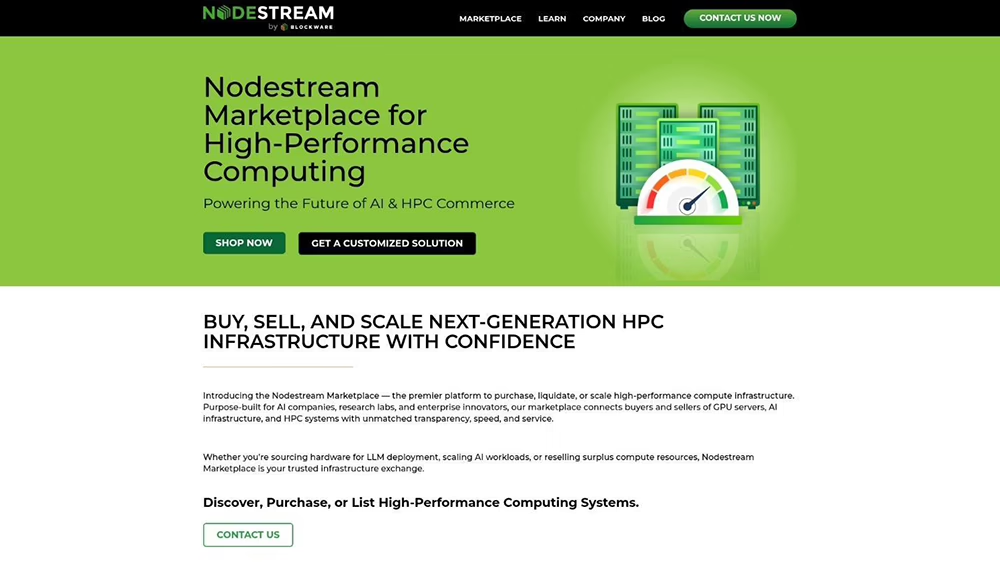
Let your data center ambitions meet real solutions. Discover how Nodestream’s platform empowers you to buy, sell, or scale next-generation HPC and AI servers instantly, with full visibility and comprehensive support. Check out our expert guide to HPC infrastructure to see how your organization can leap into the future today. Visit https://nodestream.blockwaresolutions.com to upgrade your capabilities now, while inventory lasts.